Aircraft contamination resistance. Easier cleaning, less downtime.
Every flight exposes a helicopter to oil, exhaust deposits, insects, industrial fallout and environmental contamination. On an unprotected surface, these bond to the paint and become progressively harder to remove. Airglaze Protective Coatings creates a sealed surface that repels contamination before it takes hold, making cleaning faster, less frequent and less damaging to the underlying paintwork. Lead time differs per airframe. Airbus certified.
Request a contamination resistance treatment
Problem examples
What contaminates helicopter surfaces in normal operation.
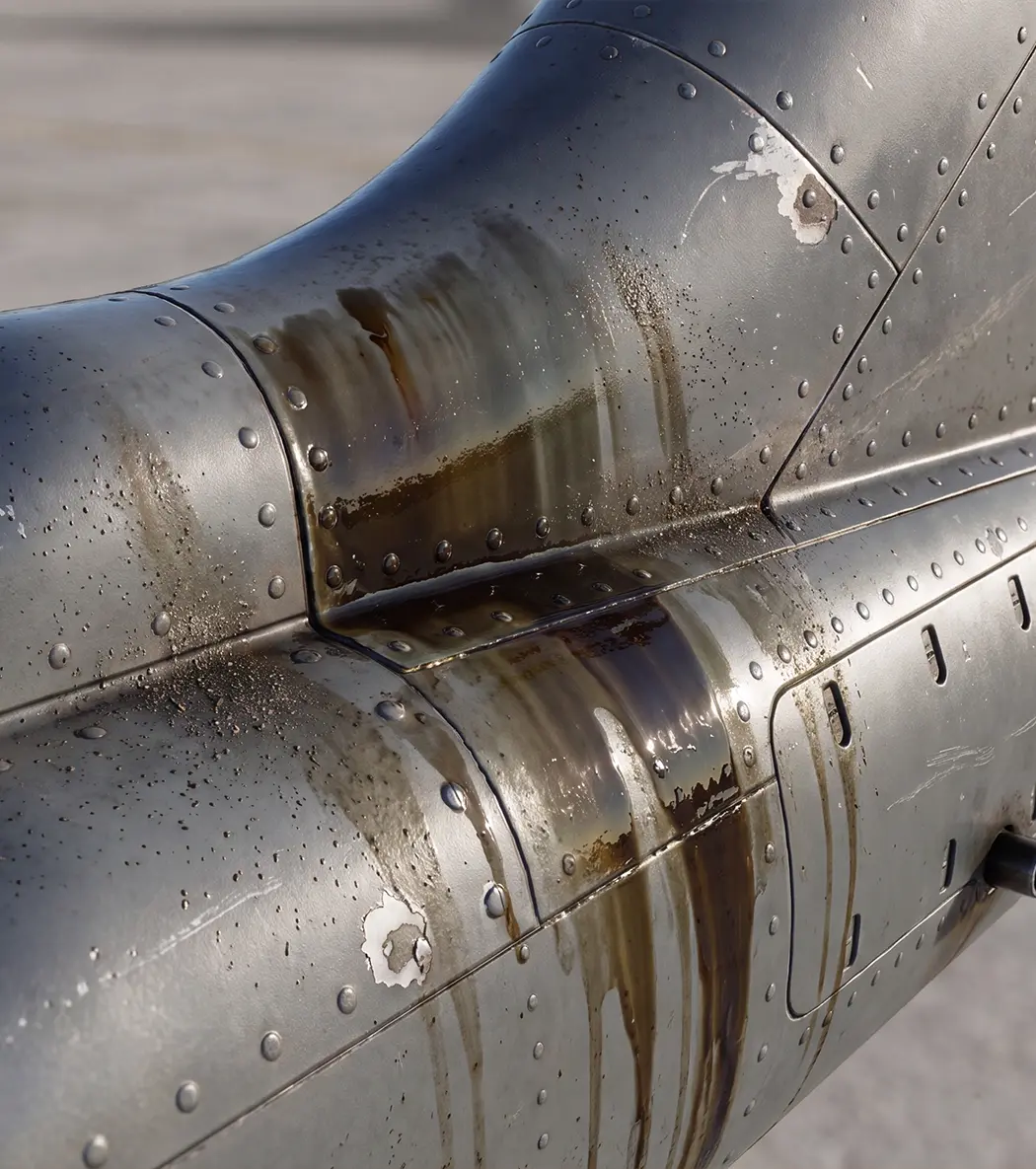
Engine exhaust deposits
Exhaust residue stains the tail boom and fuselage with carbon and oil deposits that bond strongly to unprotected paint and discolour the surface over time.
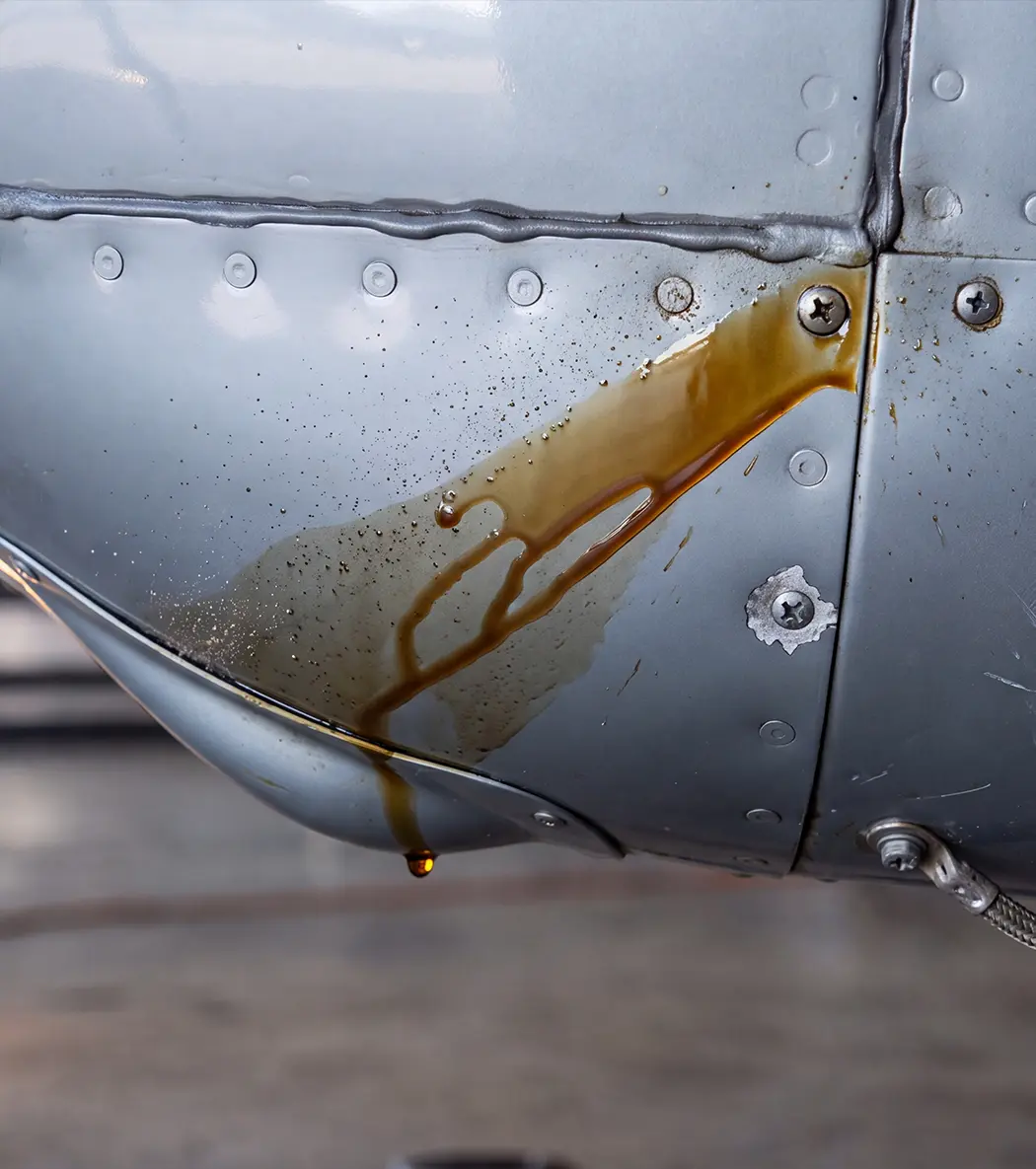
Hydraulic and oil leaks
Even minor fluid leaks leave residue on surfaces that attracts further contamination, degrades paint adhesion and creates visible staining.
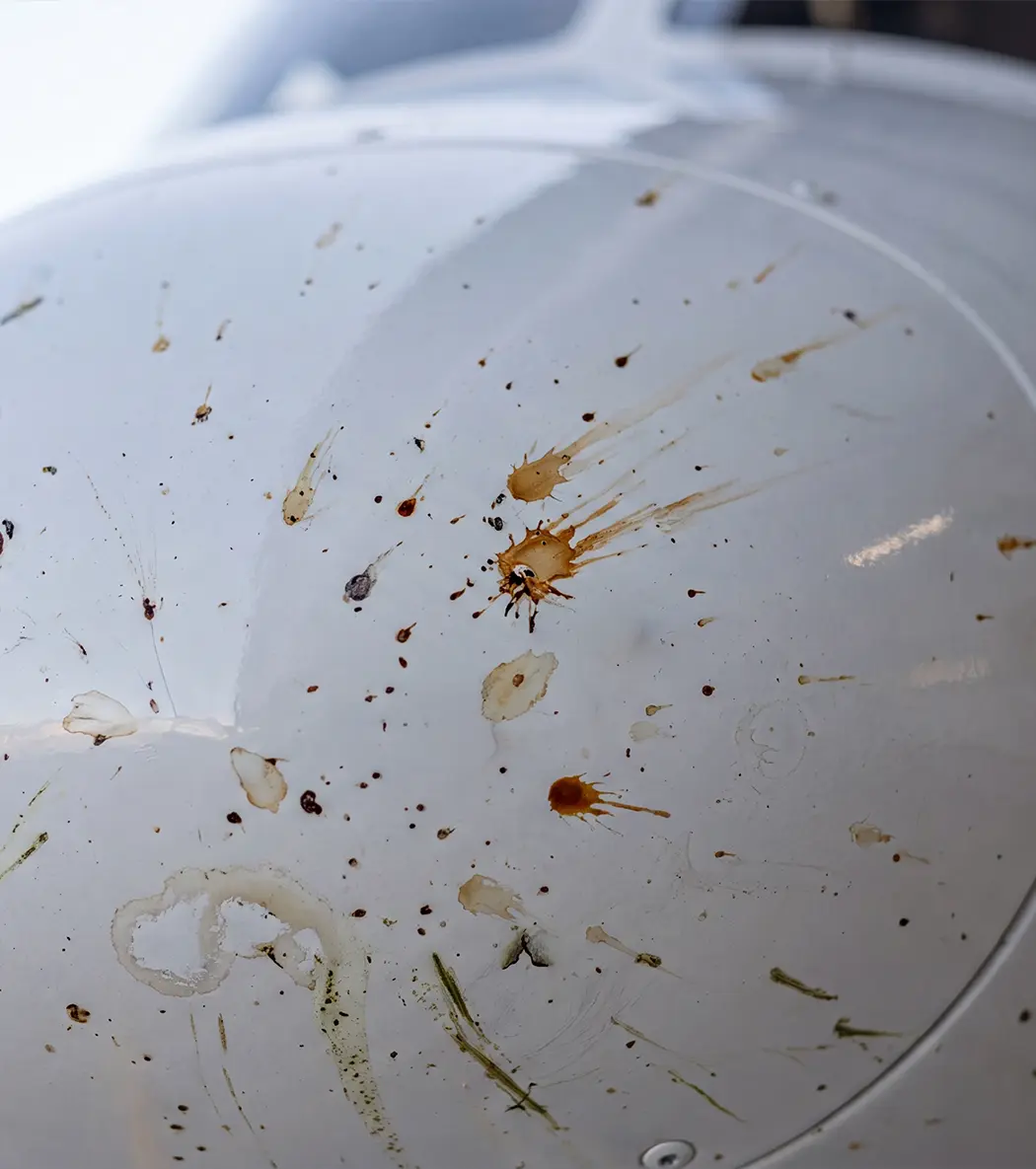
Insects and organic matter
At flying speed, insects and organic matter impact the forward-facing surfaces and glazing. Their acids begin to etch the paint within hours if not removed promptly.
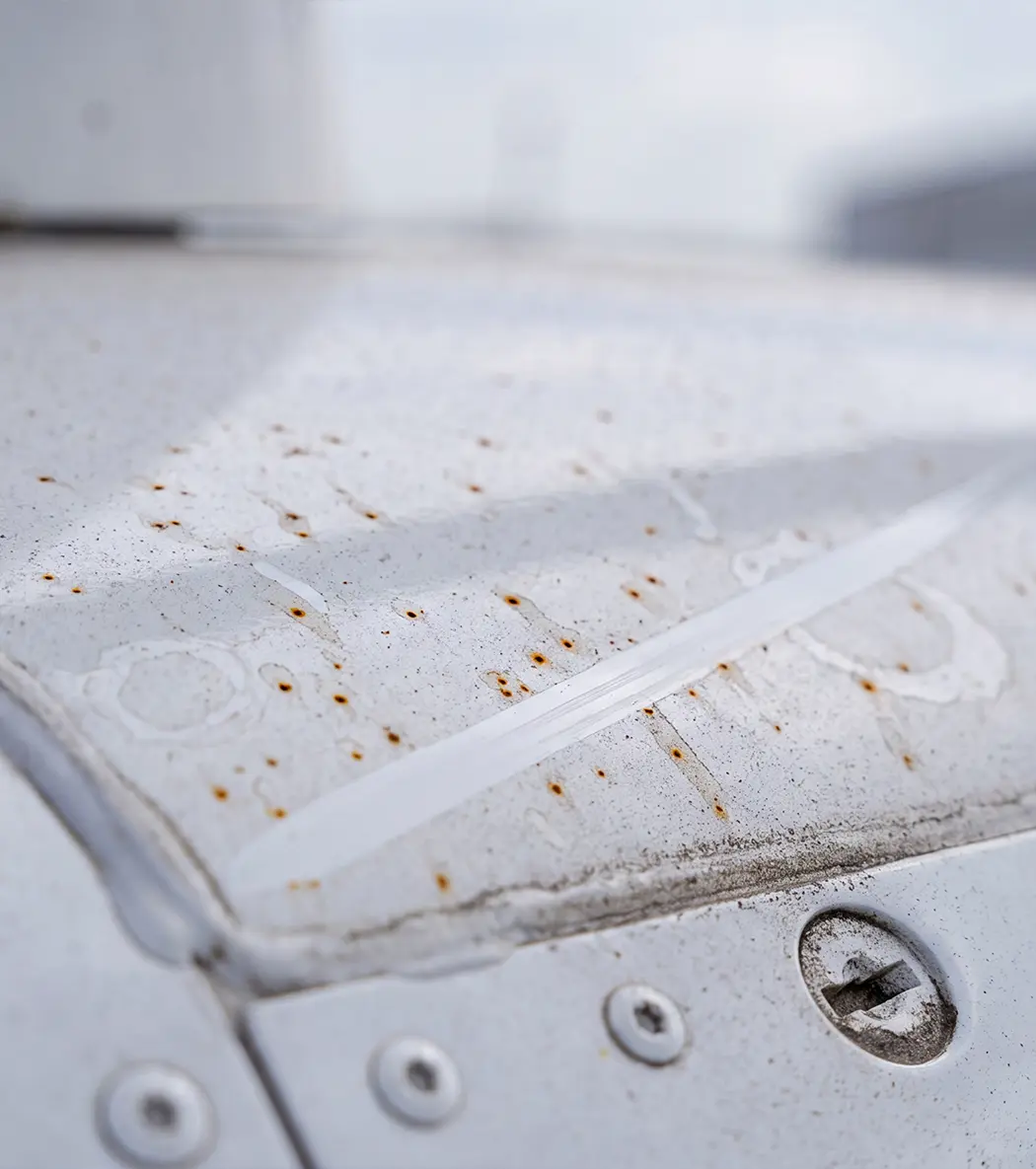
Industrial and environmental fallout
Airborne particles, dust, soot and chemical fallout settle on surfaces during ground time and can cause micro-abrasion and staining if allowed to accumulate.
The solution?
APC. A surface that sheds contamination rather than absorbing it.
When APC is applied, the sealed surface becomes significantly less receptive to contamination. Oil, exhaust deposits, insect matter and environmental pollutants find less to bond to and are removed far more easily during routine cleaning. The cleaning process requires less time, less water, less cleaning product and less physical effort, while causing less mechanical abrasion to the underlying paint.
Over time, the reduction in cleaning frequency and the extension of paint life translate into a measurable reduction in surface maintenance costs for the operator. The aircraft looks better for longer, requires less intervention and spends more time operational rather than on the ground being cleaned.
Benefits
What contamination resistance delivers in practice.
-
Faster cleaning cycles
Contamination does not bond as strongly to a sealed surface. Routine washes take less time and require less effort from ground crew.
-
Less cleaning product used
A surface that sheds contamination more readily requires fewer cleaning agents to achieve the same result, reducing consumable costs.
-
Longer paint life
Less frequent and less aggressive cleaning means less mechanical abrasion to the paintwork, extending the time between restoration or repainting.
-
More aircraft availability
Less time on the ground for cleaning means more time in the air. For high-cycle operators, that availability translates directly into operational capacity.
Spend less time cleaning. More time flying.
Get in touch and share your aircraft type and location. Our team will arrange an on site APC application at a time that fits your schedule.
Request a contamination resistance treatmentOr call us directly: +49 2452 1063946
